



SiC purity is the first factor that many purchasers consider when making a silicon carbide purchase.When describing the quality of a product, a provider may claim 98%, 99%, or 99.5% silicon carbide. When getting quotes from many suppliers, it is simple to use, compare, and add to a purchasing table.However, a buyer cannot learn all about the material’s performance in production from its purity.Due to variations in crystal structure, particle size distribution, impurity control, and manufacturing consistency, two silicon carbide products with comparable SiC content may exhibit distinct behaviors. When used for abrasive processing, refractory manufacture, ceramics, or other industrial applications, a powder that appears equivalent on a specification sheet may yield distinct outcomes.
The question of how pure the silicon carbide is is not the most helpful one for a buying manager. The true challenge is whether the material possesses the chemical and physical properties needed for the procedure and whether those properties hold true from batch to batch.
| Quality Factor | What Buyers Should Check | Why It Matters | What to Ask the Supplier |
| SiC Purity | SiC content and testing method | Indicates the main chemical composition but does not define overall product performance | SiC content, testing method, and batch test data |
| Crystal Structure | Alpha-SiC, Beta-SiC, and relevant crystal forms | Can affect hardness, thermal stability, fracture behavior, and application performance | Crystal structure and recommended applications |
| Particle Size Distribution | Actual particle size range and distribution | Influences grinding efficiency, surface finish, mixing, packing, and material consumption | Particle size distribution, sieve analysis, and classification tolerance |
| Impurity Control | Free carbon, free silicon, iron, aluminum, calcium, and other impurities | Certain impurities can affect downstream processing and final product performance | Detailed chemical composition and impurity limits |
| Production Process | Crushing, grinding, screening, classification, and separation | Process control directly affects particle characteristics and product consistency | Production process, classification method, and quality-control procedures |
| Batch Consistency | Variation between different production batches | A qualified sample does not guarantee consistent performance in future bulk orders | Multi-batch test reports and batch traceability |
| Actual Cost of Use | Material consumption, waste, and additional processing costs | A lower purchase price may lead to higher screening, waste, or production adjustment costs | Usable material rate, consumption, and production consistency |
Silicon carbide purity is only one part of product quality
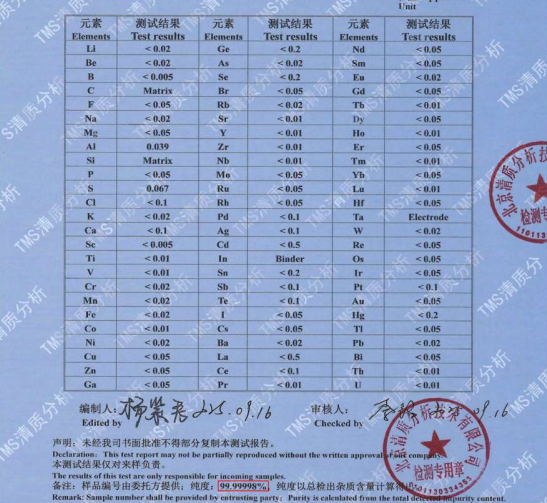
The percentage of silicon carbide in a material is indicated by its SiC purity, however this figure does not fully capture its chemical makeup.
Even with a product that claims to be 99% SiC, some of the specifications remain unclear. Free carbon, free silicon, iron, aluminum, calcium, oxygen, and other elements could make up the remaining content. The significance of these elements is contingent upon the intended use of silicon carbide.
Impurity levels that would be intolerable in a more demanding application might be tolerated by a general-purpose abrasive. While a manufacturer of ceramics might be more focused on chemical consistency and particle properties, a refractory maker might pay special attention to factors that impact high-temperature performance.
For this reason, a supplier of silicon carbide powder must to be able to offer multiple purity figures. A thorough chemical specification helps the buyer comprehend what they are really getting.
The testing technique is equally important. If the buyer is unaware of how the result was determined or whether the same testing process is applied consistently to several production batches, a reported purity number has limited value.
Crystal structure can affect how silicon carbide behaves
The many crystal forms of silicon carbide are referred to as polytypes. Whereas beta-SiC has a cubic structure, alpha-SiC is linked to hexagonal and rhombohedral structures.
The material’s physical behavior is connected to these structural variations. Hardness, heat stability, oxidation behavior, and fracture properties can all become important depending on the application.
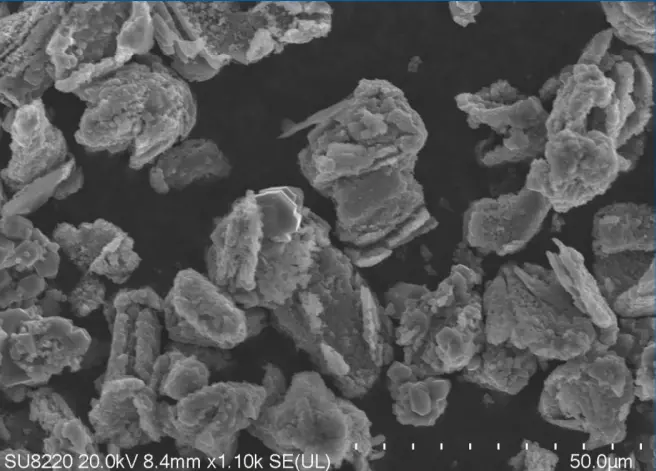
Applications involving abrasives offer a real-world illustration. Due to its hardness, a silicon carbide abrasive grain does more than only remove material. Additionally, how fresh cutting edges are exposed during use is influenced by its fracture behavior. Thus, surface finish, abrasive consumption, and grinding efficiency can all be impacted by grain characteristics.Not every industrial application requires the same consideration. While an abrasive maker might be more concerned with grain properties and grading, a buyer choosing silicon carbide for a refractory formulation might be more interested in chemical composition and high-temperature behavior.
Because of this, a specification that relies solely on SiC purity may be lacking. What happens to the silicon carbide after it leaves the supplier’s factory determines the proper material properties.
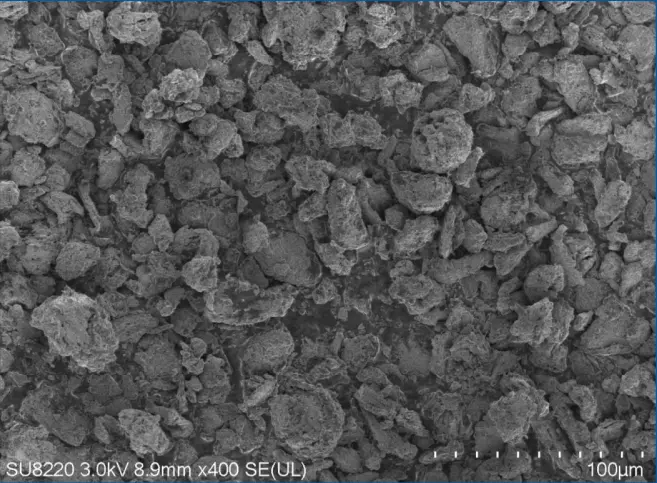
Particle size distribution matters more than a nominal size
Another parameter that is often oversimplified in supplier quotes is particle size.
If a consumer requests F120, F240, 400 mesh, or 10 μm silicon carbide, they may think that the number provides all of the information regarding particle size. Instead of displaying the precise distribution of each particle inside the product, these labels often specify a grade or target range.
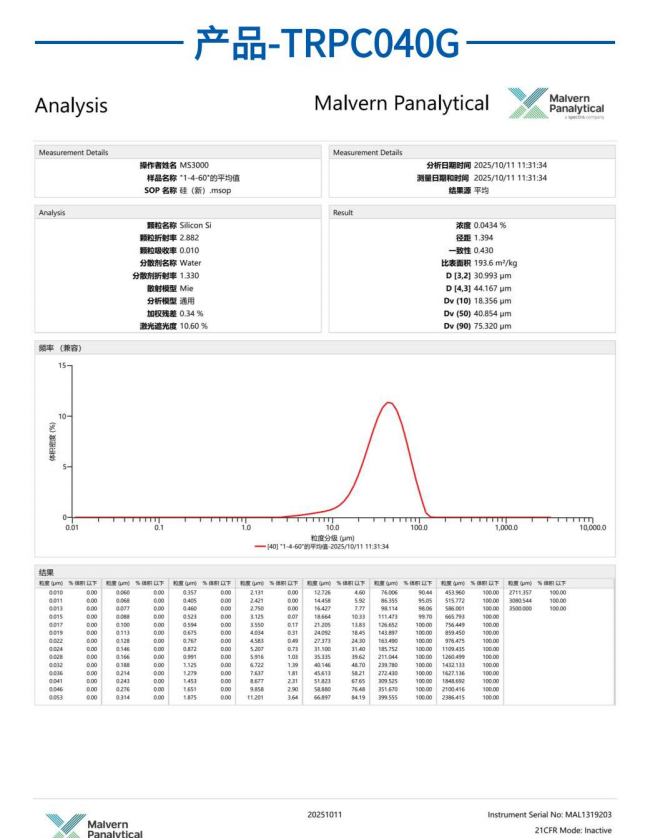
Particles of various sizes can be found in a batch of silicon carbide powder. How closely those particles are concentrated inside the necessary range and how much material falls outside of it are crucial questions.
Oversized particles can affect cutting uniformity and surface polish in abrasive applications. A surplus of fine material can alter material consumption and abrasive behavior.
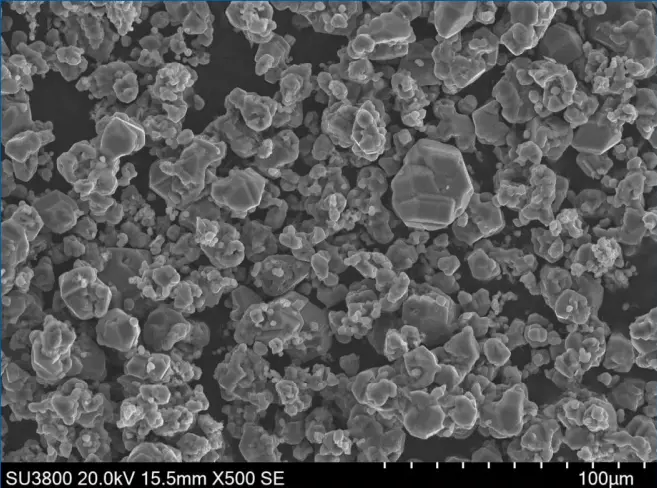
Particle distribution can impact packing density, flowability, mixing behavior, and the final product’s structure in ceramics, refractories, and other powder-based applications.
The buyer receives far more information from a provider who can explain the real particle distribution and categorization tolerance than from one who merely offers “10 μm silicon carbide powder.”
When the material is utilized frequently in a regulated production process, the difference becomes especially significant.
Particle size distribution can become a hidden production cost
Although silicon carbide is typically quoted by weight, the cost of using the material isn’t usually based on price per kilogram.
Let’s say two vendors charge comparable pricing for silicon carbide powder. The distribution of particles in one product is well regulated, whereas a greater percentage of particles beyond the intended range are present in the other.
Before being employed, the second substance might need more screening or modification. Additionally, it might act differently when being mixed or processed, which could lead to increased consumption or more frequent process modifications.
When additional handling, material waste, and process variation are taken into account, the production cost may increase even though the initial quotation may still indicate a lower price per kilogram.
Because of this, buying managers should consider the cost of usable material when evaluating suppliers of silicon carbide powder instead of depending just on the indicated kilogram price.
Impurity control tells you more than a high purity claim
Despite having distinct impurity profiles, two silicon carbide products can each be characterized as 99% SiC.
Metallic contaminants, free silicon, and free carbon can all be strictly regulated. While having varying concentrations of specific pollutants, another may achieve the same headline purity.
Depending on the application, that difference may or may not be significant.
When the final product’s appearance or chemical properties are strictly regulated, metallic contaminants may become significant. For some manufacturing procedures, free silicon and carbon may also need to stay within predetermined bounds.
Because of this, the Certificate of Analysis is a crucial document to consider when assessing a new producer of SiC powder.
Rather than merely repeating a broad statement like “high purity silicon carbide,” an effective certificate should display the criteria pertinent to the acquired grade. It is simpler to compare providers and look into any changes in production performance when the customer is aware of the actual chemical restrictions.
A good sample does not automatically mean a stable bulk order
Samples are often the first step in supplier evaluations.
A larger order is placed after the purchasing team approves the material after the sample passes the buyer’s test. The issue arises when the behavior of the second or third shipment differs from that of the initial sample.
Inadequate control over raw materials, crushing, grinding, classification, screening, and contaminant removal by the supplier may cause this.
Changes made at any point during the multiple phases of silicon carbide manufacturing can have an impact on the final product. Chemical composition can be impacted by a change in the properties of raw materials. Particle properties can be affected by grinding conditions. The percentage of particles in the target range can be altered by classification efficiency.
Batch consistency is therefore a crucial component of quality for a firm that routinely purchases silicon carbide.
A reliable supplier should be able to link the provided material to a particular production batch and have quality records that match. Instead of just supplying a good sample once, the buyer gets more proof that the supplier can replicate the desired grade when multiple batches exhibit similar chemical and physical features.
Why the cheapest silicon carbide is not always the lowest-cost material
Every purchase choice is influenced by price, yet the lowest quote does not always indicate the lowest cost of production.
For an application with broad material tolerances, a less expensive silicon carbide product would be ideal. When the production process calls for precise particle classification, regulated contaminants, or reliable abrasive performance, the same product may become costly.
The difference in purchasing price might soon lose significance if a material generates more waste, needs more screening, or necessitates frequent manufacturing modifications.
Because the supplier makes greater investments in batch control, impurity removal, testing, and classification, a more strictly regulated silicon carbide product can start out more expensive. Lower operational expenses could cover the extra material cost if those controls decrease production variance and material waste.
Therefore, it is appropriate to compare the purchase price with the real performance that the application requires.
What should a buyer check when comparing silicon carbide suppliers?
Instead of focusing only on purity, a buyer assessing a new supplier of silicon carbide powder can begin with the full specification.
The SiC concentration and pertinent impurity limitations should be displayed in the chemical specification. These parameters should be precisely determined when production is impacted by free silicon, free carbon, or metallic elements.
Particle size or grain size should be explained in the physical specification, together with information on particle size distribution if needed. When the production process is susceptible to particle variation, a nominal mesh or micron number might not be adequate on its own.
Additionally, the buyer should be aware of the supplier’s classification rules and whether or not various production batches are checked prior to shipment. When comparing vendors, batch records and Certificates of Analysis might offer helpful proof.
Information on fracture behavior, grading standards, and grain properties may be more pertinent for abrasive grades than merely comparing SiC purity. Particle uniformity and distribution may have a bigger impact on the buyer’s process for fine powders.
The ability of the supplier to describe these requirements is helpful information in and of itself. A manufacturer should be able to link product attributes with realistic production requirements if they are aware of how their material reacts in various applications.
Quality becomes visible when the material enters production
Silicon carbide may be described as “high purity,” “premium quality,” or “strictly controlled” on a product page. Without supporting information, it is challenging for a purchasing manager to assess these claims.
Actual chemical specifications, particle size distribution, pertinent testing procedures, batch records, and application-specific technical data are examples of further helpful information.
With this information, a buyer can compare vendors based on measurable attributes instead of marketing jargon.
When examining the first quotation, it might not be clear how a stable silicon carbide product differs from a cheap one. After the material has been used repeatedly in production, it frequently becomes evident.
The supplier is offering something more valuable than a high purity number if the material behaves similarly throughout several shipments, the chemical composition is constant, and the particle distribution stays within the necessary range.
This is the level at which quality should be assessed for manufacturers searching for a dependable provider of silicon carbide powder. While crystal structure, particle size distribution, impurity management, and batch consistency all contribute to understanding the material’s real performance, purity is one crucial piece of information.
A less expensive product might satisfy the basic requirements. When the order shifts from one sample to multiple commercial shipments, a steady product should continue to match the specifications.
Looking for High-Purity Silicon Carbide Grains or Powder?
Contact our technical team for custom grit sizes and wholesale quotes.
Get a Free Quote

